Certified
ISO 13485
Market Leader
healthcare industry
Best Selling
3d printer
CONTACT US

WAXJET SERIES

3D Printing Technologies
.

FLASHFORGE 3D PRINTING

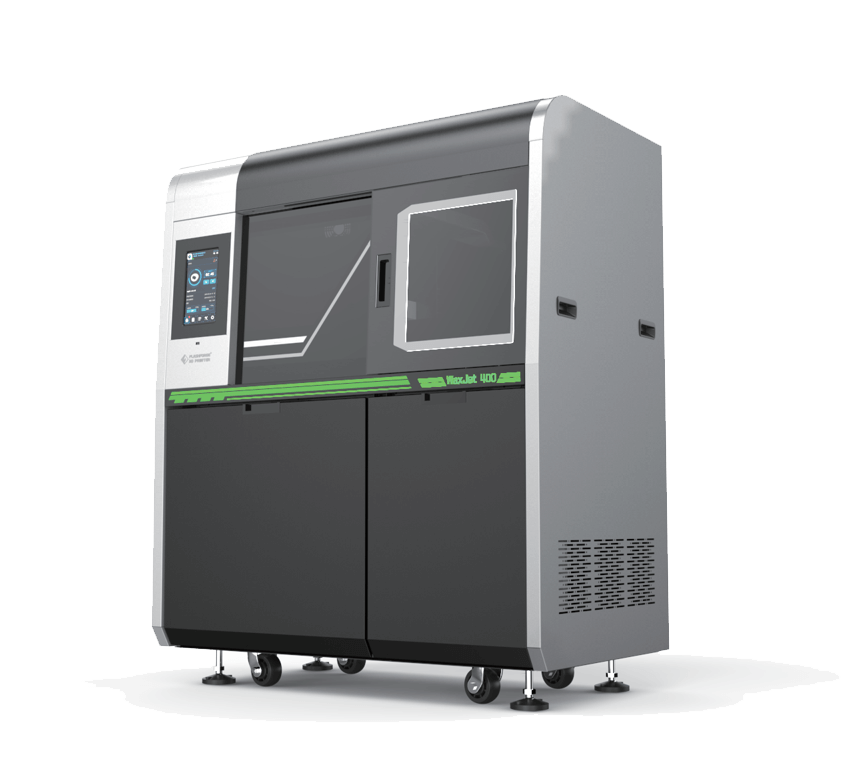
WaxJet 400 & 410

FLASHFORGE SOLUTIONS FOR JEWELRY INDUSTRY

Principle of Operation

Create An Extremely Efficient Precision Manufacturing Experience

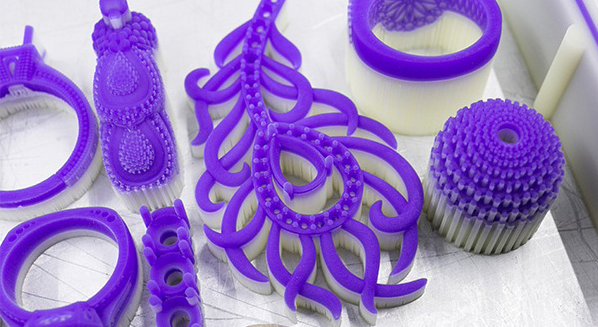
WaxJet 400 adopts mutiJet printing technology for printing smooth surface, high precision casting wax pattern. Large print size, and can be tiled and overlapped to place multiple models, the thickness of each layer is 0.016mm. It's suitable for jewelry, clocks instruments, crafts, precision casting and aerospace precision investment casting field.

WaxJet Printing Process

1. Prepare The Model Data

Jewelry designers make hand-drawing according to customers' needs and then convert it into a 3D drawing model.

2. Send the model data to the 3D printer

Edit several models on the build plate and submit the models to the 3D printer for printing.

3. Start Printing

Click on the screen to start the printing. The printing will be operated automatically with no manpower or waiting needed.

4. Obtain the wax pattern

Once the printing completed, take out the printed pattern, remove the support and dry.

5. Service assurance

The quality of printing results and your time are ensured by original after-sale service to maximize your benefits.

3D Printing vs Traditional

3D Printing Processing

  • The design cost are reduced while the patterns and complexity are increased - freedom and flexibility of designers and automatic adding in the supporting structure.
  • The development cost on plate-making and retouching can be saved and the printing results can be perfectly consistent with designers' style.
  • The printing results are of great quality and the wax models can be repeated obtained to save the management fees on models.
  • Printing process for 24/7 is supported and several printers can be operated simultaneously by one person, which largely reduce the labor cost.
  • The utilization rate of printing materials is high and their price are stable.
  • The only thing needed to expand capacity is to increase the number of printers, which cover a small area and are easy to manage.
  • The centralized administration of model data reduces the costs on data protection.

Traditional Processing

  • The design and training costs are increased as designers are supposed to design the supporting structure for each models.
  • Repeated plate-making and retouching increase the development cost.
  • Various kinds of rings with different sized and a large quantity raise the management fees on models.
  • The labor costs are high due to high dependence on skilled craftmen and high personnel mobility.
  • Self-production costs are increased for capacity expansion raises the requirements for operation sites.
  • The model data is to be send to an external party for printing and the expense on data protection is high.

OUR PRODUCT

WaxJet

GET IN TOUCH WITH AN 3D SYSTEMS SERVICE SUPPORT EXPERT AND LEARN ABOUT MORE ABOUT OUR CONTRACTS.